Preserving GCI: A Conversation with the 1970 Set Chairman
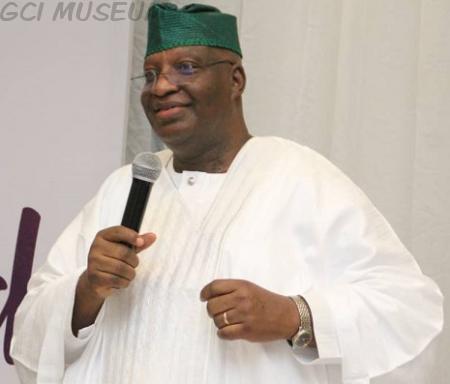 The Museum remains a powerful symbol of what Old Boys can achieve together, and no Set embodies this better than the Class of 1970. In this brief interview, the Chairman, Mr. Segun Oguntoyinbo, shares the inspiration behind the Museum project, the collaboration that shaped it, and his message for future generations of GCI students and Old Boys.
Quick Profile
• Name: Segun Oguntoyinbo
• Set: 1970
• Role: Set Chairman
• Legacy Project: GCI Museum (donated in 2021).
The Interview
Q1. What inspired the 1970 Set to choose the Museum building as your legacy project?
A: GCI was founded in 1929. It is one of the oldest secondary schools in Nigeria. As a result, it has a rich history of academic performance, sports accomplishments, and alumni who have shaped leadership and events in many spheres of human endeavour in Nigeria and globally. Members of the 1970 Set recalled that they spent their first few months in GCI studying the school and their house history, and indeed had their first examination as the ‘house test’. Although a few books have been written on GCI history, lots of articles, events, photographs and videos published in the print and electronic media, there were much more information and data to be retrieved, captured, treated and archived for posterity.
Q2. How did the idea evolve from concept to reality?
A: Ideas on the establishment of the GCI Museum were bantered back and forth by Class members; visits were made to the national Museums at Calabar and Ibadan to get more insight into the project. The possibility of a virtual museum was also considered. Finally, the Set was persuaded to combine both physical and virtual forms in a befitting building on GCI grounds and the (internet) cloud respectively. The Set improvised and fine-tuned from this design stage, to construction of building and website up to the commissioning by a visibly-impressed Executive Governor of Oyo State in October 2021.
Q3. What role did teamwork play in bringing the project to life?
A: The concept, design (building and website), construction, commissioning, and management before the hand-over to the GCI Assets Management Committee were done by the members of the Set. There was no out-sourcing of any key activity. This is because the Class Set had members who had the professional competency and capacity in-house: architects, structural engineers, quantity surveyor, construction experts, financial analysts, accountants and website designers & managers. These worked under the coordination of the Class Set Chairman and his executive. There was also a Museum Committee that reported to the Class Chairman. Through levies, periodic fund-raising, donations and placement of adverts on the Museum website, funds were mobilized entirely from members of the Class Set. Every single member participated financially. it was team work at its best!
Q4. How do you feel seeing how the Museum has grown and is serving the GCI community today?
A: Every member of the 1970 Set stands very satisfied and proud of its legacy project. Today, the GCI Museum is a ‘must see’ for every dignitary visiting the School. It hosts every important meeting of the governance of the School: the Board of Trustees, National Executive Council, GCI School Board, Board of Governors, etc.
Q5. What message would you like to leave for younger Sets regarding giving back to the school?
A: Every GCI Old Boy of my generation was trained to give back to the society (including our alma mater). Indeed, the School Motto is Learning to Serve. Further, the need to give back is being inculcated in the present and future generations of GCI students through the school motto and also the PwC-mediated GCI blueprint and 5-year (2023-2027) strategic plan recognises ‘giving back’ as one of the four key objectives (along with academic, sports and character excellence) that out dream GCI is predicated upon. The present GCI students are witnesses to the phenomenal development and growth in the physical infrastructure by GCI Old Boys. They can see the influence of transparent and accountable leadership by GCIOBA and the zeal, fraternity and competitive spirit of Class Sets and Branches which are the engines of this development.
Q6. Looking back, what part of the project are you most proud of?
A: Apart from hosting important meetings as a result of its excellent facilities, the Museum location, medieval age design, structure and internal ambience is a veritable addition to the GCI infrastructure complex. The website though still work-in-progress, has archived for eternity, the school register which captures all Old Boys who have passed through the School from 1929 to about 2010, history, key events, etc. Images of artefacts, memorabilia, newsletters, periodicals and books, annual lectures, and projects are also warehoused in the Museum. You can search and retrieve key information or data seamlessly. One is proud of each and every aspect of the Museum’s contribution to GCI. There is also the commercial aspect of the Museum. It has the potential of being a key profit center when this potential is fully realized. It can generate significant income through adverts of firms owned/operated by Old Boys on the website and also through its holding the sole franchise to market customized GCI memorabilia.
Q7. How would you describe the impact of the Museum on GCI and the Old Boys community?
A: In conclusion, the Museum has been highly impactful on GCI and the Old Boys community for the above-stated reasons. There is still room for improvement as it is a living project. The challenge for the Class Set is to think deeply to replicate the Museum effort to birth a similarly impactful project as its 60th anniversary legacy Project!